Thursday, January 21, 2010

Northern Hawk Owl

Surveying the area
Going in for the kill
In flight
In for the second kill
Whatchoo lookin' at?

Friday, January 15, 2010

Wal-Mart's Green Goal

Wal-Mart's Green Goal

Posted using ShareThis

Wal-Mart Thoughts

In class today we had a fairly spirited discussion about the evil, or perhaps not so evil(?) corporation, Wal-Mart. We talked about the traditional reasons people hate the company, ie. it takes $$ from the community without putting any back in, it doesn't promote local agriculture or industry, continues to outgrow and build buildings, and wastes large amounts of resources shipping across the nation, etc.
Our professor, who had worked as a lawyer helping employees with disputes with their companies over medical leave, etc, had a different view. She stated that Wal-Mart more often worked with their employees to help them through the tough situation, and keep their jobs. Now in part, that is due to the nature of large business, they can absorb the cost of paying an employee who is temporarily unable to work, in a way that Mom and Pop stores would be unable to.
Another issue, and to me the more pressing one, was the issue of environmentalism. Wal-Mart is riding the green revolution wave, to tell their customers how they can make change to benefit the environment, they're trying to reduce shipping and packaging, and promoting local agriculture and products to some extent, and is even providing their truckers with space heaters to reduce idling on the roadside while drivers get some shut-eye.
These all seem like good changes, and in truth they are. While Wal-Mart, and large corporations like them certainly have the power to do more, this is a generous leap in the right direction. Companies that big have the ability to influence change, by demanding their suppliers change. The environmentalist community has to a large extent not gotten behind Wal-Mart in this action. Old habits die hard, and it's easy to hate the corporate giants, but supporting them in this endeavor will hopefully continue to foster further change.
My professor made an extremely valid point that Wal-Mart and Coca Cola, and other large multi-national corps reach Americans that generally aren't on top of environmental issues. Who don't regularly read up on the latest scientific discoveries, or follow the environmental blogs of groups like Greenpeace and WWF. These are the Americans who may not believe global climate change is happening. If Wal-Mart can do their part to transition, America may well follow. While they have a long long way to go, I for one will commend the changes they have made, and watch for further future change.

Sunday, January 10, 2010

Birding in Burlington Area with Peter

Yesterday I birded up in the Burlington area with a friend and fellow birder from VLS. We headed up to Burlington Intervale to start our day, where there are steaming piles of compost that birds enjoy. Probably both to pick through for food, and for the heat they give off. There we got two Glaucous Gulls, and saw a handful of red-tailed hawks sitting on the warm compost heaps.
Snow Bunting in with a Horned Lark flock.
Then we headed to the breakwater, where we saw Iceland gulls sitting on the breakwater with Greater Black-backed Gulls. Got my state mallards ;) and saw some common mergansers.
Lapland Longspur.
After grabbing a sandwich we headed toward the agricultural lands south of Burlington, where our target species were longspurs and buntings. We pulled off and walked a few feet onto a farm where we got some good looks at snow buntings in a flock of horned larks, before the farmer came up and questioned us.
We continued driving around the ag lands for the rest of the afternoon, and were rewarded with good looks at a lapland longspur on the ground next to our car. We struck out on rough-legged hawks, the species Peter guaranteed we'd see, hehe. It's okay, I'll have more opportunities this winter to try for them.
Hoping to go snowshoeing early next week before classes start back up again.

Friday, January 08, 2010

January Hike in SoRo

Took a short hike in the snow today. There was light snow falling for most of my walk. Birds were quiet, just the occasional small chickadee flock. By someone's house I caught a few dark-eyed juncos and one downy woodpecker calling and moving around a tree.
At one point the snowfall got much heavier and I discovered that falling snow has a sound. It kinda reminds me of the way rice crispie cereal sounds when you pour milk into it. Very faint crackling noises. I had snow on my eyelashes, my mouth, and all over my bins and camera. It was magical =)

Top 10 Birding Memories of 2009

My 2009 Memories:
  1. First birding trip of 2009, Irvine Ranch Conservancy hike along Quail Hill Loop with Evelyn.
  2. February Wildflower Hike with Irvine Ranch Conservancy along Loma Ridge, over Limestone Canyon.
  3. Night Hike up Agua Chinon Canyon to the back side of the sinks, with IRC.
  4. April OC Birdathon with Neil Gilbert and Vic Leipzig, got my life spotted owl!
  5. Taking a sunset photography lesson with professional photographer Andre Torng.
  6. Filming Wild in the City pilot in LA county with some birder friends and Richard Crossley.
  7. Picking Lois Taylor's brain on plant ID on the IRC hike in Round Canyon.
  8. Catalina was one long awesome birding memory, but the West End hummer tour stands out.
  9. Hiking up Kent's Ledge to see the fall foliage changing in Vermont.
  10. It's not birding, but the first snowfall in SoRo was quite a memorable experience.
Finally, I counted, and according to eBird, I got 14 lifers in 2009!

Sunday, January 03, 2010

CBC Bonita Creek Park and Arroyo Park

This morning I birded Bonita Creek Park and Arroyo Park and the drainage in between. The diversity was pretty dismal, but certain species numbers were extremely high *cough* yellow-rumps *cough* Too many early morning joggers/walkers, especially those with dogs, about 3/4 of which were not on leashes. Grrrr.
Best birds for me probably were the California gnatcatchers calling from the hillside below the Bluffs shopping center (loads of coastal sagebrush growing on the slope probably helped) and a gorgeous look at a hermit thrush near the back entrance of Arroyo Park. The area under the Bluffs shopping center was extremely birdy, plenty of stuff calling - I really had my fill of birding and counting by ear today, let me tell you!
I ended up by Harbor View and Bonita Canyon in the sports park complex, where the most common birds by far were European starlings - ick.

Saturday, January 02, 2010

Birding in the New Year

Today I went birding with Grace and Alex at my old stomping grounds, the San Joaquin Wildlife Sanctuary. We got about 44 species in three hours, not bad for a leisurely stroll around the marsh. I had no trouble IDing most species, but for some reason I kept seeing mallards at funky angles and making them into all sorts of things, sigh, I must be out of practice. Best bird of the morning was the common goldeneye we watched fishing under the footbridge heading toward the riparian area of the marsh.
We stopped by Upper Newport Bay on the way home to check for the Bar-tailed Godwit being reported in the rocky mud flats under the Jamboree underpass. No luck today, but I'll go back every morning this week until I fly home and keep trying for it.
Tomorrow I'm going to do the Christmas Bird Count in my area, I'll just be counting at the park within walking distance from my house, but hopefully that will be helpful enough. Good to be birding in 2010!

Friday, January 01, 2010

New Year 2010!

Happy New Year everyone. New years resolution? Get out and bird more for my health and mental relaxation ;)

Tuesday, December 08, 2009

Icicles on my Window

There's a storm coming to SoRo tomorrow. We're supposed to get up to 5 inches of snow. Today I'm staying inside studying, and making homemade biscotti and hot cocoa =)

Sunday, December 06, 2009

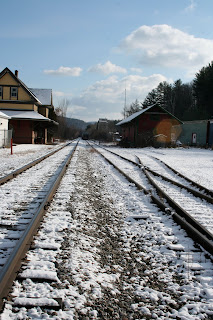
Snow in SoRo!

It's finally snowed in South Royalton! I woke up to a white world, after the snow started late yesterday afternoon and through the night. There are icicles hanging from my windows, and my car was buried under a layer of white. I spent a little time walking around town, documenting the new view.

Thursday, November 26, 2009

Happy Thanksgiving

Hope everyone is enjoying a meal today with family and friends. I have to admit I'm a little disappointed that its not snowy and cold today. I had images in my head of my first white holidays. I won't be on the east coast for Christmas since I'm going home, so I was hoping for a snowy Turkey Day... oh well, as I've heard before, we'll soon have plenty of snow and I'll be sick sick sick of it. Yeah yeah, bring it on!

In the spirit of the day, here's an old blog post containing a few fun facts about turkeys =)

Thursday, November 19, 2009

November Frost

Well I haven't been able to get out much, but this morning the frost looked so gorgeous in the sunlight that I just had to go out and snap a few photos to share!

Tuesday, November 17, 2009

Birds and Climate Change

The World Wildlife Fund put out a very interesting report on the global status of Birds and Climate Change. Here's a link to the very interesting document, give it a peek!

Tuesday, October 20, 2009

Kent's Ledge Hike - Fall Foliage

Leaf season is truly incredible in Vermont. Over the fall break I went on a hike up Kent's Ledge to check out the fall colors. It was a nice cool day, perfect for a hike. Bird life included chickadees, brown creepers, white-breasted nuthatches, downy woodpeckers, American robins, a hermit thrush, and blue jays.

Monday, September 14, 2009

Class Readings

This article is an assigned reading from my extinction and climate change course - how awesome is that?


Chronicle Of Higher Education, August 16, 2002 Are You a Lumper or a Splitter?

By MALCOLM G. SCULLY

Michael A. Mares, director of the Sam Noble Oklahoma Museum of Natural History at the University of Oklahoma, puts it bluntly: "If you don't know the taxonomy, you know nothing." In A Desert Calling: Life in a Forbidding Landscape, published this year by Harvard University Press, Mares adds, "Not to understand how a species differs from a closely related species is ... to be ignorant at a most fundamental and profound level about all aspects of the biology of the species, its populations, the community of interacting species, and the ecological system in which they function." Few biologists would disagree, in principle, but, as Mares acknowledges, answering the question of what constitutes a "good" species has long been a confusing and controversial exercise, especially in parts of the world that have not been studied extensively. Knowing exactly when a population of creatures differs enough from similar populations to qualify as a separate species is no simple matter. Yet the issue of getting species "right" has taken on growing importance as concern has grown over such issues as identifying and protecting the world's biodiversity, developing conservation programs, and adopting policies, such as the Endangered Species Act, to prevent extinctions.

The issue is especially difficult in ornithology, where the differing and sometimes competing interests of hobbyists, environmentalists, systematists, and evolutionary biologists, among others, have triggered confusion and contention. As Clemencia Rodner, president of the Venezuelan Audubon Society, says in a recent message on an e-mail list for people interested in neotropical birds, "The taxonomy of South American birds has been in turmoil for a number of years now. It requires no crystal ball to predict that it will continue to be in that agitated state for many more years to come." There are, she adds, "many tacit agendas that run as undercurrents affecting taxonomic discussions. ... I have observed politics (both national and institutional), patriotic sentiments, birding-guiding, xenophobia, prestige, paranoia, ambition, egotism, lack of professional ethics, dismissal of scientific methods, and plain old stupidity get in the way."

The debate in ornithology has often been described as being between lumpers and splitters, between those who group separate but very similar populations of birds into a single species and those who divide such populations into full species. Generally, the lumpers employ what is known as the biological species concept, which until recently was the dominant taxonomic approach. Its proponents define a species was a group that is reproductively isolated from other groups, which means, as Douglas J. Futuyma, an evolutionary biologist at the State University of New York at Stony Brook, explains, that "two groups do not substantially exchange genes in nature, because of 'biological' differences that prevent gene exchange."

Many splitters use the increasingly popular phylogenetic species concept, which, as described by Joel Cracraft, curator of the department of ornithology at the American Museum of Natural History, defines a species as a "diagnosable" population, "among which there is a pattern of ancestry and descent." Futuyma adds that a phylogenetic species is "any population in which most members share a distinctive feature of any kind that distinguishes it from other populations."

The divisions aren't simply a matter of scientific disagreement. For one thing, avid birders who compete to see the largest numbers of species get an automatic addition to their life lists -- "an armchair tick" -- if they have seen individual birds from two populations that are subsequently split into different species. In one case, they could add as many as five more species without leaving home: Under the phylogenetic approach, geographically separated populations of the purple swamphen, a coot-like bird found in subtropical and tropical areas, have been split into six species. Such splits have been characterized as "tournithology" -- because they create new targets for birders willing to travel the world in search of new species for their life lists.

While birders and systematists have their own preferences in determining what constitutes a species, the "species problem" may become an increasingly political issue in debates over how best to protect biodiversity. Many environmentalists fear that confusion spawned by disagreements over the issue will give governments and developers an excuse to move ahead with plans and programs that could reduce biodiversity before we can even agree on how much of it there is.

As Rodner says in her message, "The real battle is not between splitters and nonsplitters. It is between our capacity to complete the task of identifying/defining the continent's avian fauna and the capacity of governments to allow and even promote its destruction." Especially in South America and Southeast Asia, she adds in a later e-mail message, the need to collect and study species is urgent. We still don't know all the animals we have in the world, she says, "and yet we are erasing miles and miles of habitat, and with them scores and scores of animals with every passing day." James Van Remsen Jr., curator of birds at the Louisiana State University Museum of Natural Science, warns as well that conservation biology will face major credibility issues "if anti-conservation people pick up the scent that a new concept is being adopted as a ploy to elevate more taxa to species level." "Taxonomic decisions need to be divorced entirely from conservation issues, or risk being devalued," Remsen says. Taxonomic problems arise, in part, because evolution is a process whereas a classification is a snapshot of that process at a moment in time.

The late ornithologist Charles G. Sibley wrote in 1996, "Evolution produces all degrees of genetic differences between populations of organisms, but, for practical reasons, we must limit the number of degrees we choose to 'recognize' by names. We assign names of populations and proposed definitions of

taxonomic categories based on various criteria, but the 'species concept' is slippery because there are so many examples in nature of populations that refuse to fit our limited set of definitions and names." Sibley himself was one of the fomenters of a controversial revolution in avian taxonomy. He and a colleague, Jon E. Ahlquist, used a process known as DNA-DNA hybridization -- in which strands of DNA from different species are bound together and compared -- to determine the relationships of the various families of birds. The results, published in 1990, shook up conventional taxonomies and drew both admiration and derision. From their studies they concluded that many earlier classifications of the relationships of bird families were wrong. For instance, they said that vultures found in North and South America were more closely related to storks than to Old World vultures, and that loons and grebes, which many

taxonomists had argued were closely related, weren't.

Sibley and Ahlquist's work remains controversial and has not been widely accepted, but many people believe that eventually DNA studies will resolve many of the most vexing taxonomic issues. Louisiana State's Remsen notes, however, that genetic-based approaches work best at the "higher and middle taxonomic levels" -- in establishing how closely families, genera, and species are related to each other. Molecular techniques are less useful, he adds, when you're trying to decide whether distinctive populations of similar birds should be lumped or split. "What molecular data can give you is an approximation of how different" the genes of two isolated populations are, he says, "but how you interpret those differences is basically arbitrary. "How different do they have to be genetically before you call them two species? It's arbitrary, as arbitrary as any decision made in any species concept." Even if molecular techniques can resolve many issues, Rodner notes, that day has not yet arrived. Systematists still need to collect and study specimens, and ornithologists need to learn as much as they can about the behavior, range, vocalizations, and other characteristics of bird populations. Sibley also acknowledged that the changing taxonomic approaches could look like little more than a game to outsiders. "But there is serious science in this process," he added, "because we are trying to fit nature into a system to improve our understanding of the processes and products of evolution, yet nature is complex and often resists our

simplifications."

Over the years, those efforts to fit birds into a system have resulted in a growing number of species. In 1951 Ernst Mayr and Dean Amadon published a world list that totaled 8,590. By 1996, when Sibley and Burt Monroe published their own list, the total had risen to 9,946 known species. The discovery of previously unknown species -- primarily in South America and Asia -- accounted for a small part of that increase, but the large majority came from the reclassification of subspecies as species. And with the growing popularity of the phylogenetic species concept the numbers could soar. Edward O. Wilson, in his recent The Future of Life (Alfred A. Knopf, 2002), says, "It is not out of the question that the number of validated living bird species will eventually double, to twenty thousand." And doubling the number of species would probably double the

number needing protection as well.

Saturday, September 12, 2009

First Real Vermont Birding Day

Today was my first legit birding day. It was a bit quiet for most of the day, but good species popped up every once in a while. Lifers for Leigh included Cape May Warbler, Black-throated Blue Warbler, Veery, Yellow-bellied Sapsucker. Other sightings included Red-breasted Nuthatch, Black and White Warbler, a Hermit Thrush, Red-eyed Vireos, and Black-capped Chickadees galore.
I can tell I'm becoming a "leaf-peeper" because 95% of my photos were of trees instead of birds. That's probably due in part to the fact that the looks were pretty high up and fleeting, and the lighting fairly dismal.

Friday, August 28, 2009

Woodstock, Vermont

I took a day trip to Woodstock, Vermont today, here's a few of the photos I got =)

Japanese Beetle

Barred Owl

Friday, August 21, 2009

South Royalton, Vermont

Well I've officially moved to Vermont. I am surrounded by gorgeous greenery, and outside my window, a plethora of birds are calling - most of which are baffling me at the moment. I will need to brush up on my eastern bird calls! So far the campus and town is absolutely delightful, with the one small exception of the humidity, which won't last too much longer anyhow. Today as part of our orientation, we will be hiking with the Dean as well as the VLS Outdoors Club, which I intend to join. I'll bring my camera so I can post photos of my new home!