Solar powered roads make absolute sense for the Southwestern United States. It harnesses the solar energy that these roads already attract. The opportunity to add in the messages to the roads is also a great one, making night driving much more safe. Cost may be an impediment, but as petroleum costs rise, even asphalt roads will be pricier. This is a step in the right direction for sure.
Tuesday, October 26, 2010


Wednesday, October 20, 2010
Open Season: Sandhill Cranes
I wanted to pass along a very distressing blog post from a fellow birder and blogger on the hunting of Sandhill Cranes throughout the Central Flyway. I was stunned to read that there is hunting allowed for this species.
Now, just my two cents here, but I do not oppose hunting. I'm a vegetarian, and don't hunt or even eat meat myself, but hunters are often some of the largest supporters of conservation initiatives in America. After all, you can't hunt it if the species dies out, or there's no land to hunt on. I'm all for sustainable hunting practices, and in some places, deer management is an integral part of the wildlife management plans. However, a species like Sandhill Cranes does not fall on my "okay to shoot at" list. I don't know how hard this would hit the population, but unless it can be proven to be a sustainable practice, I would be against it.
Take a moment to read her blog post, learn about Tennessee's controversial practices, and make an informed decision for yourself about how you feel about the issue of crane hunting.
If it bothers you, pass along the story to raise awareness, and consider taking an even more active role by writing to your local representatives, or trying to get your local conservation groups involved.
If it bothers you, pass along the story to raise awareness, and consider taking an even more active role by writing to your local representatives, or trying to get your local conservation groups involved.
Thursday, October 14, 2010
Audubon Naturalist Society
I've been working as a Contract Naturalist with the Audubon Naturalist Society in Chevy Chase, MD. Not to be confused with the National and local Audubon Society, which I have worked with in the past. I am doing nature-themed birthday party programs, scout programs, etc on a contract basis.
They're a lot of fun, and you get a small dose of environmental ed, kids, and often are force-fed birthday cake ;) What a great opportunity for a part-time job to keep my environmental education resume current, get my fix of teaching and working with kids, and get to get outdoors to play around for a bit every few weekends! Yippie!
Wednesday, September 15, 2010
Window Strike Wednesday
Well this morning, I woke up to an extremely depressing sight. I was on my way out of the building to work, and found a perfect worm-eating warbler lying dead on the pavement. Window strikes are the number one cause of mortality in birds annually. While everyone likes big windows in their home or office to let in natural light, and give them a beautiful view to contemplate, most don't realize that birds - having no concept of glass - fall prey to those windows.

"Between 100 million and 1 billion birds die from crashing into glass every year in North America alone, according to Audubon Magazine; they are either confused by the reflections in windows or simply can’t see the glass, and fly into it at full speed."
I want desperately to help people become aware of this issue, because there are so many workable solutions out there to solve this problem. There are films that you can buy to adhere to your glass that make it visible to birds, without obstructing your view. There is also bird-friendly glass out on the market that uses technology borrowed from spider webs to make glass visible to birds while keeping the glass clear to the human eye. With so many options, both high tech, and low, expensive and cheap, we should be able to keep birds from meeting their demise at the expense of our view.
Groups like City Wildlife's Lights Out DC, Lights Out Chicago, Lights Out New York, and FLAP exist to try and raise awareness, yet most Americans have never even considered the fact that glass is such a deadly killer - it's worth spreading the word!
Groups like City Wildlife's Lights Out DC, Lights Out Chicago, Lights Out New York, and FLAP exist to try and raise awareness, yet most Americans have never even considered the fact that glass is such a deadly killer - it's worth spreading the word!
 |
| http://www.sibleyguides.com/conservation/causes-of-bird-mortality/ |
Tuesday, August 24, 2010
Canoeing on the Potomac
Saturday I went canoeing on the Potomac River with some new birder friends. One worked for the Potomac Conservancy, and needed to do an informal survey of invasive plants on an island owned by the Conservancy. We paddled out to Minnie's Island, with some difficulty since the water level was so low and the area rocky. We enjoyed great looks at a very active Green Heron, and then pulled the canoe out and hiked around the island, looking at plants, bugs and birds.


It was so lush and green, and the hum of cicadas so loud I felt like I was in a tropical forest in South America, or back in time. A native sunflower bush was attracting droves of Eastern Tiger-Swallowtails and Monarchs.


We birded around and discussed the various invasive plants, trying to ID them and and figure out how best to go about doing a removal and restoration. The high water line was well overhead, which really gives you goosebumps when you realize the ground you're standing on could, and has been, under water.


After we finished surveying the island, and feeding the happy mosquitos, we got back in the canoe and paddled up-river for a while. We saw what at first looked like a stick bobbing toward us, as it came closer, we realized what we were looking at was a water snake - swimming with an eel in it's mouth! It swam under the boat, and to a rock where it lost the eel. I felt sorry because I wondered if our paddling in for a closer look had distracted the snake enough for the eel to twist away. I hope it wasn't our fault he lost his lunch. He was a big gorgeous snake, probably a brown water snake. So exciting!


It was definitely the highlight of the day, and after paddling up a bit further, we headed back to the boat launch and hauled the canoe back up to the lockhouse, then headed home. It was a great morning and although I had so many mosquito bites coating my legs it looked like chicken pox, I was extremely happy to have gotten out on the water.


Tuesday, August 17, 2010
Reminiscing About Texas, 2006
I was Wildbird Magazine's 2005 Birder of the Year, which won me a trip to Texas in early spring of 2006. Here's the recount article that I wrote for the July/August 2006 issue of WildBird:
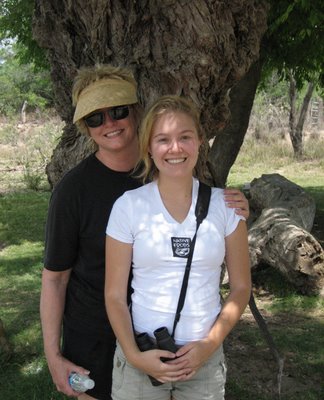 The trip to the Rio Grande Valley of Texas was an incredible experience. We--my mom, Amy Hooper and I--started off the trip by spotlighting for Common Pauraque on Saturday with Sheridan Coffey and Martin Reid. We walked along the water at Bentsen-Rio Grande Valley State Park. When we finally saw a pauraque fly, it became my first lifer of the trip. My nonbirding mom unexpectedly enjoyed the outing so much that she chose to bird with us for the rest of the trip.
Sheridan and Martin enthusiastically guided us for the first two days. On Sunday, we first stopped at Anzalduas County Park (956-585-5311) and saw Black-bellied Whistling-Ducks, a quirky species. The Turkey and Black Vultures (a lifer) riding a thermal over the park provided an unexpected surprise. We also saw Golden-fronted Woodpeckers, a Northern Parula, Couch’s Kingbirds, Great Kiskadees and a magnificent Scissor-tailed Flycatcher.
On our way back to Bensten, I spotted my life Harris’ Hawk. Once at Bensten, we got our first look at Green Jays, and on a feeder, we watched a Long-billed Thrasher, an Altamira Orioleand an Indigo Bunting take turns. In a photo blind, we heard Plain Chachalacas calling from all sides.
Next stop: Santa Ana National Wildlife Refuge, where we birded with intern Heidi Trudell. Life birds included Black-crested Titmouse and Roseate Spoonbill. We sat to wait for the day’s last lifer, a Buff-bellied Hummingbird.
On Monday, we visited the hawkwatch at Santa Ana and saw Broad-winged Hawks, Mississippi Kites and many others overhead. The lift-off was breathtaking. Up the river at Chapeno, we picked up Ringed Kingfisher from a distance as well as Brown Jays, one juvenile and one adult. We later parted ways with Martin and Sheridan and headed to San Benito.
Tuesday morning, Pat Wade joined us as our guide, and we quickly got my first lifer of the day: Tamaulipas Crows carrying nesting material. Then we went to the Sabal Palm sanctuary, where I got my life Carolina Wren singing on a branch. We also saw the controversial Gray-crowned Yellowthroat.
The Aplomado Falcon (unbanded) and the White-tailed Hawk provided roadside treats on the way to South Padre Island, an amazing place. My last lifer of the trip was Upland Sandpiper off-island, and like my first Texas lifer, I lost a pint of blood to the mosquitoes in order to get it.
I gained more than 40 new birds, enjoyed fantastic experiences and met some superb people. To top it off, my mother gained a better understanding of who I am and what birding is. I’d say that alone made it a successful trip.
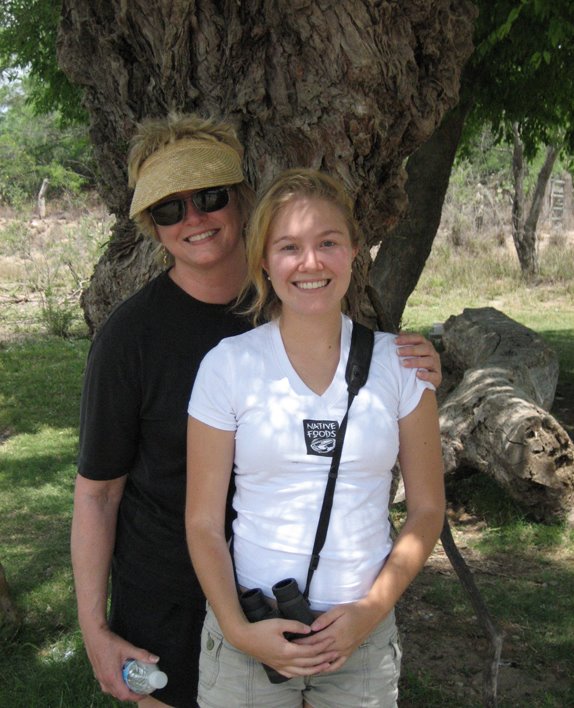 The trip to the Rio Grande Valley of Texas was an incredible experience. We--my mom, Amy Hooper and I--started off the trip by spotlighting for Common Pauraque on Saturday with Sheridan Coffey and Martin Reid. We walked along the water at Bentsen-Rio Grande Valley State Park. When we finally saw a pauraque fly, it became my first lifer of the trip. My nonbirding mom unexpectedly enjoyed the outing so much that she chose to bird with us for the rest of the trip.
Sheridan and Martin enthusiastically guided us for the first two days. On Sunday, we first stopped at Anzalduas County Park (956-585-5311) and saw Black-bellied Whistling-Ducks, a quirky species. The Turkey and Black Vultures (a lifer) riding a thermal over the park provided an unexpected surprise. We also saw Golden-fronted Woodpeckers, a Northern Parula, Couch’s Kingbirds, Great Kiskadees and a magnificent Scissor-tailed Flycatcher.
On our way back to Bensten, I spotted my life Harris’ Hawk. Once at Bensten, we got our first look at Green Jays, and on a feeder, we watched a Long-billed Thrasher, an Altamira Orioleand an Indigo Bunting take turns. In a photo blind, we heard Plain Chachalacas calling from all sides.
Next stop: Santa Ana National Wildlife Refuge, where we birded with intern Heidi Trudell. Life birds included Black-crested Titmouse and Roseate Spoonbill. We sat to wait for the day’s last lifer, a Buff-bellied Hummingbird.
On Monday, we visited the hawkwatch at Santa Ana and saw Broad-winged Hawks, Mississippi Kites and many others overhead. The lift-off was breathtaking. Up the river at Chapeno, we picked up Ringed Kingfisher from a distance as well as Brown Jays, one juvenile and one adult. We later parted ways with Martin and Sheridan and headed to San Benito.
Tuesday morning, Pat Wade joined us as our guide, and we quickly got my first lifer of the day: Tamaulipas Crows carrying nesting material. Then we went to the Sabal Palm sanctuary, where I got my life Carolina Wren singing on a branch. We also saw the controversial Gray-crowned Yellowthroat.
The Aplomado Falcon (unbanded) and the White-tailed Hawk provided roadside treats on the way to South Padre Island, an amazing place. My last lifer of the trip was Upland Sandpiper off-island, and like my first Texas lifer, I lost a pint of blood to the mosquitoes in order to get it.
I gained more than 40 new birds, enjoyed fantastic experiences and met some superb people. To top it off, my mother gained a better understanding of who I am and what birding is. I’d say that alone made it a successful trip.
Sunday, July 11, 2010


Tuesday, June 29, 2010
Birding at Dean Shield's House
This morning I joined the Ecology professors and some students from their class for a bird walk at Dean Shield's home. He and his wife have a gorgeous home in Tunbridge, about 20 minutes from the law school. Opportunities like this are what set VLS apart from your average law school. It was a gorgeous morning, and we got a great species list for the day, adding some great birds like green heron, belted kingfisher, a calling great-crested flycatcher, and chimney swifts.

The misty fog burned off pretty quickly

The pretty flowers are called Bladder Campion - Thanks for the ID Peter! 

Gorgeous posing cedar waxwing

Cedar waxwing take 2

Do you see the Baltimore Oriole's hanging basket nest hidden in the branches?

Monday, June 28, 2010
A Very Pertinent Post from a Reader:
I can't figure out how to comment onthe 350 badge. I would NEVER post this badge because it features bird killing windmills. I refuse to give any more money to the Sierra Club because they use the figure of this windmill. There are other windmills which do not kill birds. At what cost do we blindly continue our over populated path.

 Leigh said...
Hi, thanks for sharing. I have huge problems with wind power for precisely that reason. I think many people aren't even aware of how much of an impact wind power projects have on birds. They do kill birds predominately because they're placed on the flight path of migration routes, where wind funnels through passes, etc - places birds travel through for the same reason. There needs to be more emphasis placed on putting wind power projects in place that are designed to protect against those casualties.
Glass has an incredible impact on birds as well though, millions of birds are killed every year for hitting windows during migration, both of houses, and of tall office buildings. At present, very little is being done to make people aware of this deadly effect, and while there are some people working to develop glass that birds can "see" while still being see-through for humans, not nearly enough is being done to market it at a large scale. There are many many problems out there facing birds, wind energy is just one of them, and frankly, I see wind energy as the lesser of two evils because at least it's working to wean us off the use of fossil fuels, which kill many birds as well - the Gulf spill is only one example.
Glass has an incredible impact on birds as well though, millions of birds are killed every year for hitting windows during migration, both of houses, and of tall office buildings. At present, very little is being done to make people aware of this deadly effect, and while there are some people working to develop glass that birds can "see" while still being see-through for humans, not nearly enough is being done to market it at a large scale. There are many many problems out there facing birds, wind energy is just one of them, and frankly, I see wind energy as the lesser of two evils because at least it's working to wean us off the use of fossil fuels, which kill many birds as well - the Gulf spill is only one example.
Anyone else have valuable thoughts, comments, information to share?
P.S. - I know this is a passionate issue for many people, myself included, but please try to restrain yourself from directed anger or ranting, and instead share insights and try to foster a valuable conversation on the issues.
Low-Impact Development Can Have a Huge Impact on Run-Off
Many people don't realize how much runoff from urban and suburban areas impact the water quality of our rivers, streams, lakes, and oceans. Here's a link to EPA's site on how low-impact development, and green infrastructure improvements can vastly decrease the impact that non-point sources have on pollution.
Wednesday, June 16, 2010
Deepwater Horizon Oil Spill
The disaster in the Gulf will have lasting effects on the environment for many years to come. Here is a link to the Official Response site on the Gulf clean-up. The images of oiled birds and turtles have me tossing and turning every night, and new and disturbing aspects of the spill are brought to light daily. Below is a link to a YouTube video made by a birder in the Gulf, which shows some of the unintended negative effects of the response on sensitive species. I think it highlights just how unprepared BP and the agencies were to handle a disaster of this magnitude.
There is an effort to raise awareness and funding for the continued recovery effort. It's important that this be done because the general public has a woefully short attention span for disasters - think Katrina and Haiti. This jeweler has a Gulf collection - it's my understanding that some of the proceeds go towards the clean-up effort.
This link helps to give you a visual understanding of the size of area the spill encompasses. Pretty frightening in these terms.
Sunday, May 30, 2010


Hiking Mt. Tom with Victor
Mt. Tom is a small peak above Woodstock, VT, very similar to Kent's Ledge, which I've hiked on several occasions. It was a quick, fairly easy hike, at least until the last stretch where it was very steep. The weather was gorgeous, cool, breezy, and sunny out, mid 70s. Perfect day for a hike!


Birding With Peter and Merril
Right before I left VT to visit home in Cali, I went on a very relaxed bird walk with Peter and his girlfriend Merrill. We just walked around the area surrounding his house (really nice vegetation along a brook). We had red-eyed and blue-headed vireos, a veery, a least flycatcher calling and ovenbirds singing. I was buzzed by a ruby-throated humming bird, and of course chickadees followed us wherever we went.


Because it was mid-afternoon, and ridiculously windy, warblers were a wash, but it was still nice to get out and hike around a bit. They had been out turkey hunting at the crack of dawn, and had some dinner to show for it! Personally, I think I'll stick to watching birds ;)
Friday, May 07, 2010


Subscribe to:
Posts (Atom)


